Water vs soil propagation is the first decision every new propagator makes, and it’s usually made on instinct. A jar on the windowsill feels easier. A pot of mix feels more “proper.” Both can work, but they fail in different ways, and that’s what should decide it.
This guide compares the two using guidance from the RHS and several US university extension services, then explains how to choose for the plant in front of you. It’s part of our water propagation hub, and you can read how we research and write our guides.
Short version: Root in water if the plant roots easily (pothos, philodendron, tradescantia and similar), you want to watch progress, and you’ll pot it up promptly. Root in soil or another solid mix if the plant is woody, slow or prone to rot, or if you’d rather skip the transplant step. Expert sources agree on one trade-off: water roots are a different kind of root, and they may take a harder hit when moved to soil.
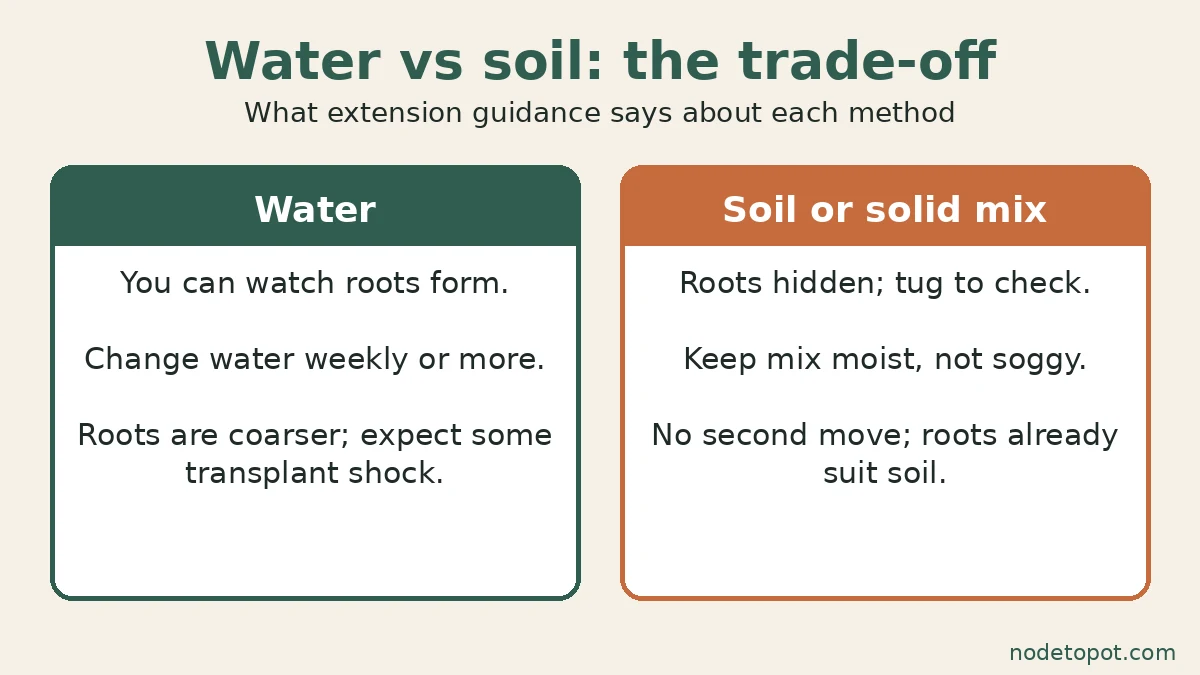
Water vs soil propagation at a glance
| Water | Soil or solid mix | |
|---|---|---|
| Can you see roots forming? | Yes, which is the main appeal (UVM Extension) | No; check with a gentle tug (Virginia Cooperative Extension, UVM) |
| Extra transplant step? | Yes, into soil once rooted | No; UVM notes rooting in soil avoids it |
| Root type | Coarser (Iowa State), weaker (UMN), may undergo greater transplant shock (Virginia Cooperative Extension) | Already adapted to a solid medium |
| Routine care | Change water weekly (Virginia Cooperative Extension) or once or twice a week (Iowa State); replace if cloudy (UVM) | Keep moist but not soggy (RHS); a clear cover helps hold humidity (UVM) |
| Main risk | Stagnant, oxygen-deficient water (Virginia Cooperative Extension); woody stems usually rot (Missouri Botanical Garden) | Mix drying out, or staying too wet |
| After rooting | May wilt or drop leaves after potting (Iowa State) | Grows on in place, or potted on with its root ball |
| Typical rooting time | About 3–4 weeks for many plants (RHS; Missouri Botanical Garden) | About 3–4 weeks (RHS); 3–6 weeks at 65–75°F for stem cuttings (Iowa State) |
| Best for | Species that root easily | Most plants, including woody and slow ones |
Sources: RHS, Iowa State University Extension, Virginia Cooperative Extension, University of Vermont Extension, University of Minnesota Extension, Missouri Botanical Garden.
Which roots faster: water or soil?
This is the question everyone asks, and the honest answer is that the expert sources we read don’t settle it. None of them reports a head-to-head timing comparison for houseplants.
What they do give is time ranges. The RHS says houseplant cuttings should root in about 3–4 weeks in a bright spot out of direct sun, and that late spring to early summer is the best time to take them. Missouri Botanical Garden gives a similar 3–4 weeks for cuttings in water. Iowa State says houseplant stem cuttings typically root in three to six weeks at 65–75°F.
So “water is faster” is not something the sources support, and neither is the reverse. What water does is make roots visible sooner, because you see the first root tip the day it appears. In soil, the same root is hidden until it’s long enough to resist a tug. That can make water feel faster even when it isn’t.
Temperature probably matters as much as the medium. Virginia Cooperative Extension recommends keeping air and medium at 70–75°F (21–24°C), and Iowa State’s 65–75°F (18–24°C) range comes with a note that a heat mat helps. A cool room will slow either method.
What the sources say about survival after rooting
Here the sources are much more consistent, and they lean toward solid media.
- Virginia Cooperative Extension says roots grown in 100% water may undergo greater transplant shock than roots formed in a solid medium.
- Iowa State describes water roots as coarser than roots formed in a rooting medium, and notes that once potted, water-rooted cuttings may wilt or drop leaves while they adjust.
- University of Minnesota Extension notes that roots grown in water are weaker than those grown in solid rooting media.
None of this means water-rooted cuttings usually die. It means the weak point of water propagation is the move to soil, not the rooting itself. If you choose water, the transplant is the step to plan for. We cover it in detail in moving cuttings from water to soil without losing them, and the transitions hub covers moves between other media.
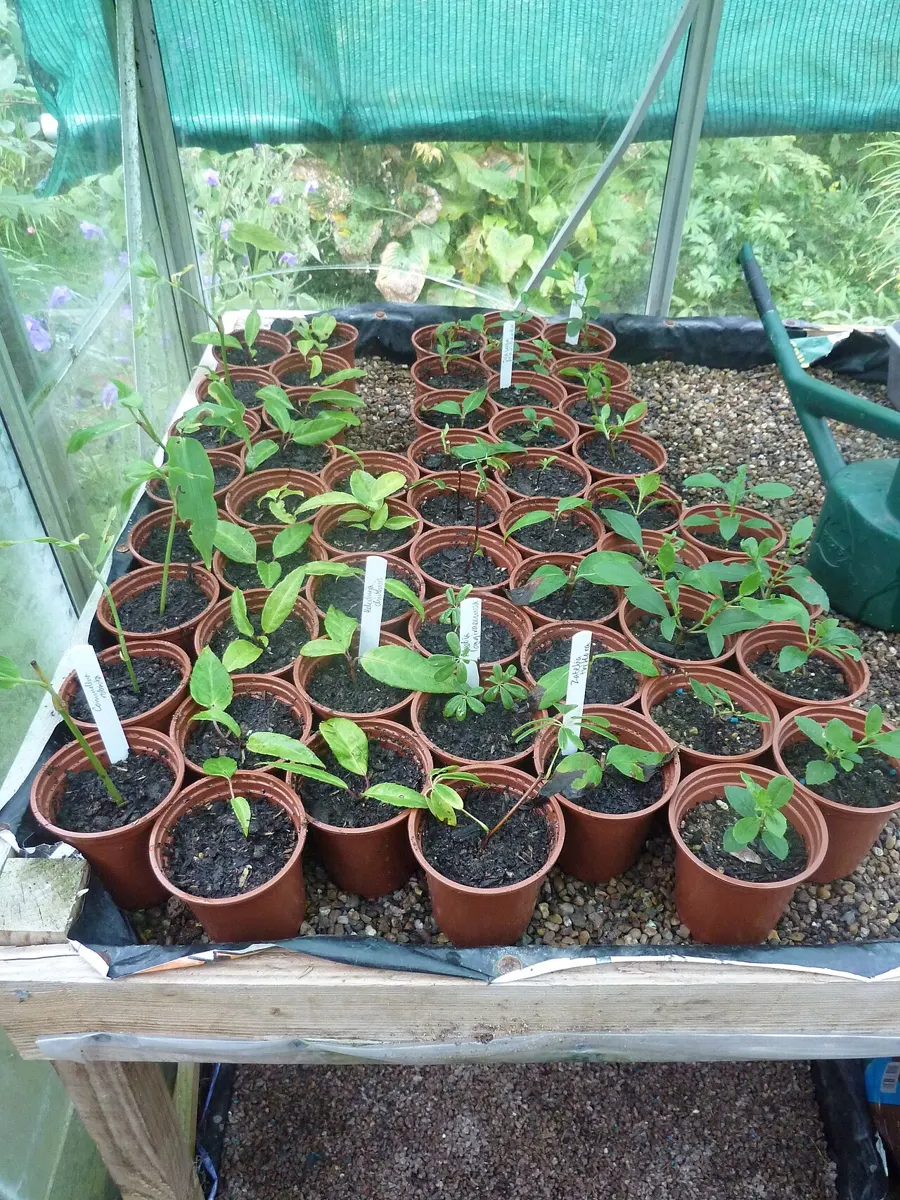
Soil has its own failure point, which comes earlier. A cutting in a solid mix has no roots to draw water at first, so it depends on the mix staying evenly moist. Virginia Cooperative Extension stresses that the medium should be moist before cuttings go in and that slow rooting can drain a cutting’s limited water reserves. Too wet is just as bad, which is why the RHS says moist, not soggy.
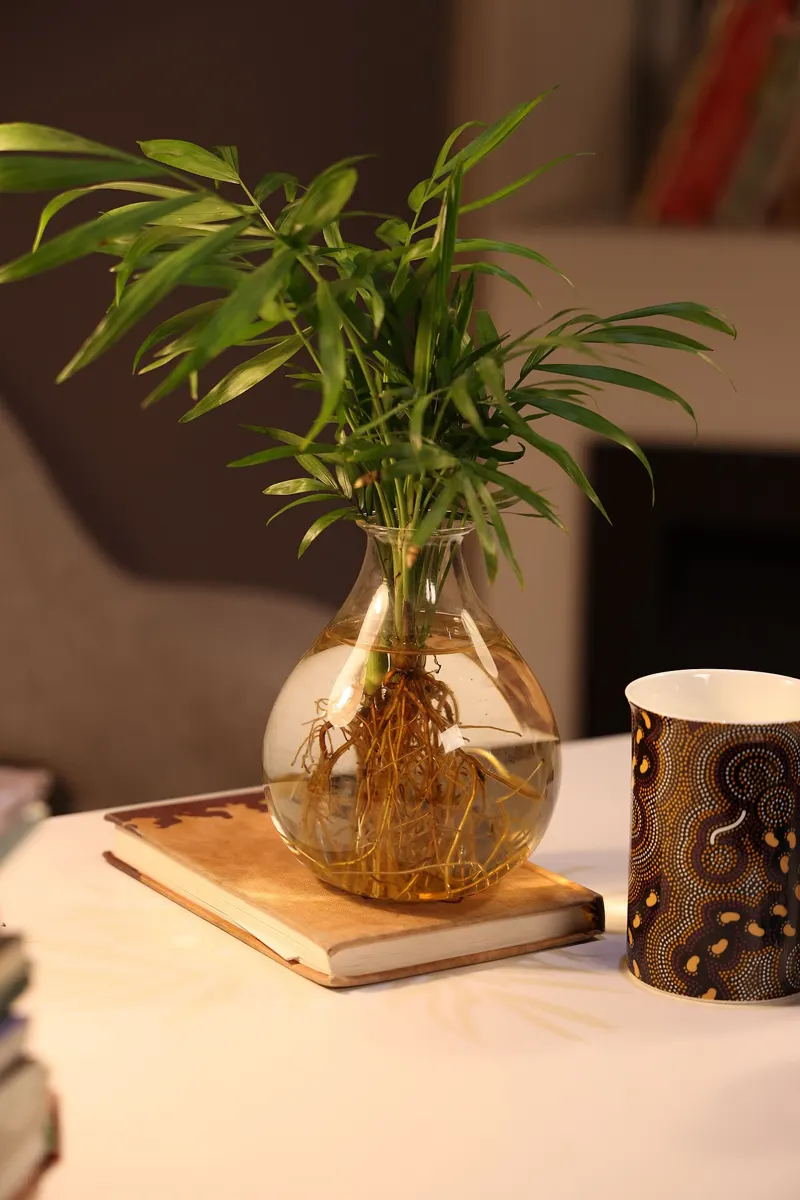
Root quality: what the difference looks like
Iowa State describes water roots as coarser in texture than roots formed in a rooting medium, and that is the difference to look for when you compare the two. Whatever the medium, UMN Extension describes healthy roots as creamy white and firm. Brown, soft or slimy roots point to rot rather than a normal water root.
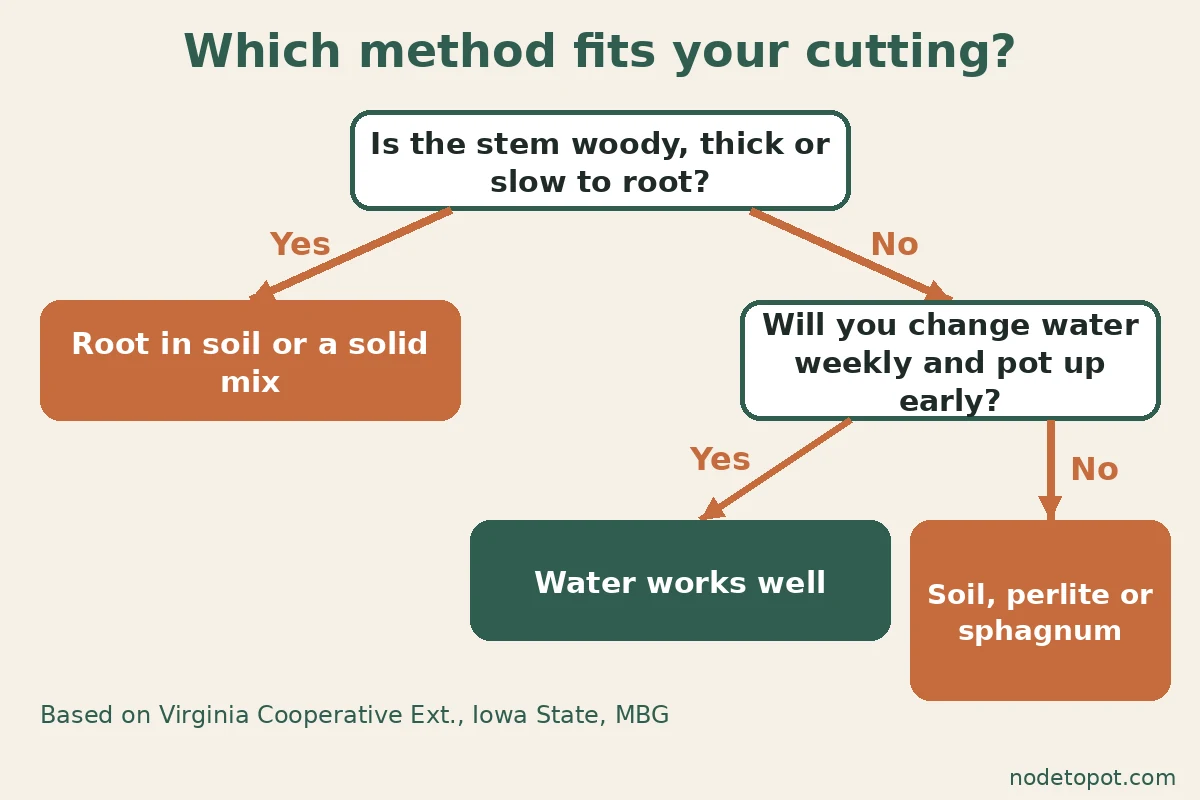
How to choose: a quick decision guide
Choose water if:
- the plant is an easy rooter, such as pothos, philodendron, English ivy or tradescantia, which UVM Extension lists among plants that root easily in water;
- you want to watch roots form, or you’re new and want clear feedback;
- you’re willing to change the water regularly and pot up promptly.
Choose soil or a solid mix if:
- the plant is woody (Missouri Botanical Garden says woody plants usually rot in water);
- it’s a large or slow cutting that will sit for weeks;
- you’d rather not deal with a second move and the transplant stress that comes with it;
- you’re rooting several cuttings to grow on together in one pot.
Consider a middle option if you like the visibility of water but want media-grown roots. UMN notes that perlite is a common rooting medium, and Iowa State describes it as holding a good balance of water and air. Sphagnum moss is another option; see how to propagate in sphagnum moss. One caution from the RHS: it notes perlite has a significant environmental impact and that locally sourced grit or gravel is now preferred in mixes.
How to do each method well
Rooting in water
- Take a cutting just below a node. The RHS suggests about 8–10 cm (3–4 in); Missouri Botanical Garden suggests 4–6 in (10–15 cm); UVM suggests 3–6 in.
- Strip leaves from the lower nodes so no leaves sit under the water (UVM).
- Use room-temperature water in bright, indirect light.
- Keep the water fresh. Virginia Cooperative Extension warns that water not changed weekly becomes stagnant, oxygen deficient and inhibitory to rooting; Iowa State says change it once or twice a week; Missouri Botanical Garden says to add fresh water as needed.
- Pot up on time. Advice varies: Iowa State says at about 1 in (2.5 cm) of root, Missouri Botanical Garden 1–2 in, and UVM once roots pass 2–3 in. Since Virginia Cooperative Extension flags transplant shock for water roots, the shorter end of that range is a sensible default.
Rooting in soil
- Pre-moisten the mix before the cutting goes in (Virginia Cooperative Extension). The RHS uses a 50:50 mix of peat-free multipurpose compost and perlite.
- Make a hole with a pencil, insert the cutting and firm the mix gently around it (UVM).
- Cover with a clear bag or dome to hold humidity, opening it if condensation drips (UVM).
- Keep the mix moist, not soggy (RHS), in bright light without direct sun.
- After 2–3 weeks, tug gently. Resistance means roots have formed (Virginia Cooperative Extension).
Common mistakes with each method
- Water: leaving the same water for weeks, letting leaves rot below the waterline, and waiting for a jar full of roots before potting up.
- Soil: dry mix at the start, a pot that’s too big and stays wet, and pulling the cutting out to check rather than tugging gently.
- Both: a cold or dim spot, and giving up too early. Some plants simply take longer than the 3–4 week guideline.
If a cutting in water is turning brown and mushy, that’s a rot problem rather than a choice-of-method problem. Monstera is a common example; see why a monstera cutting rots in water, and browse the problems hub. If your cutting has roots but won’t grow, read pothos cutting has roots but no new leaves. Going the other way, from soil to water, is covered in converting soil roots to water roots, and growing plants in water long term has its own hub.
FAQ
Is water propagation bad for plants?
No. Virginia Cooperative Extension says it works for species that root easily. The catch is that water roots are different from soil roots, so the move to soil needs care.
Does water or soil propagation root faster?
The sources we used don’t settle it. The RHS and Missouri Botanical Garden give about 3–4 weeks, and Iowa State gives 3–6 weeks for stem cuttings in a rooting medium. Water only makes roots visible sooner.
Can you root cuttings in water and then keep them in water?
Many cuttings can live in water for a long time, but this guide is about rooting cuttings to grow in soil. Long-term growing in water or LECA is a different setup, covered on our semi-hydro pages.
Should I use rooting hormone in soil?
It’s optional. UVM Extension describes it as not necessary for houseplant cuttings in soil. Virginia Cooperative Extension suggests a product containing a fungicide if you use one, except on soft, fleshy stems.
How do I know a soil cutting has rooted?
New growth is a good sign, and a gentle tug that meets resistance confirms it (UVM; Virginia Cooperative Extension).
Keep reading
- The step after water rooting: moving cuttings from water to soil
- Soil-free alternatives: LECA vs Pon in our semi-hydro hub
- Specific plants: our plant guides