LECA vs pon is the first real choice most people face when they move houseplants out of potting mix and into a semi-hydro setup. Both are mineral, both are reusable, and both hold water in porous grains while leaving air gaps around the roots. They are not interchangeable, though. The biggest practical differences are grain size, starting pH and the fact that the best-known pon comes with fertilizer already mixed in. This guide sets them side by side using the manufacturer’s own documents and university extension sources, and it says plainly where those sources disagree. For the basics of each, see what pon substrate is and how to use LECA, or start at the semi-hydro hub.
Quick answer: Pick LECA if you want a near-neutral medium with no built-in feed, already use your own hydroponic nutrient, or are filling larger reservoir pots. Pick pon (or unfertilized BASICPON) if you are rooting cuttings or growing fine-rooted plants, or if you want the first months of feeding built in. Neither is “better” across the board.
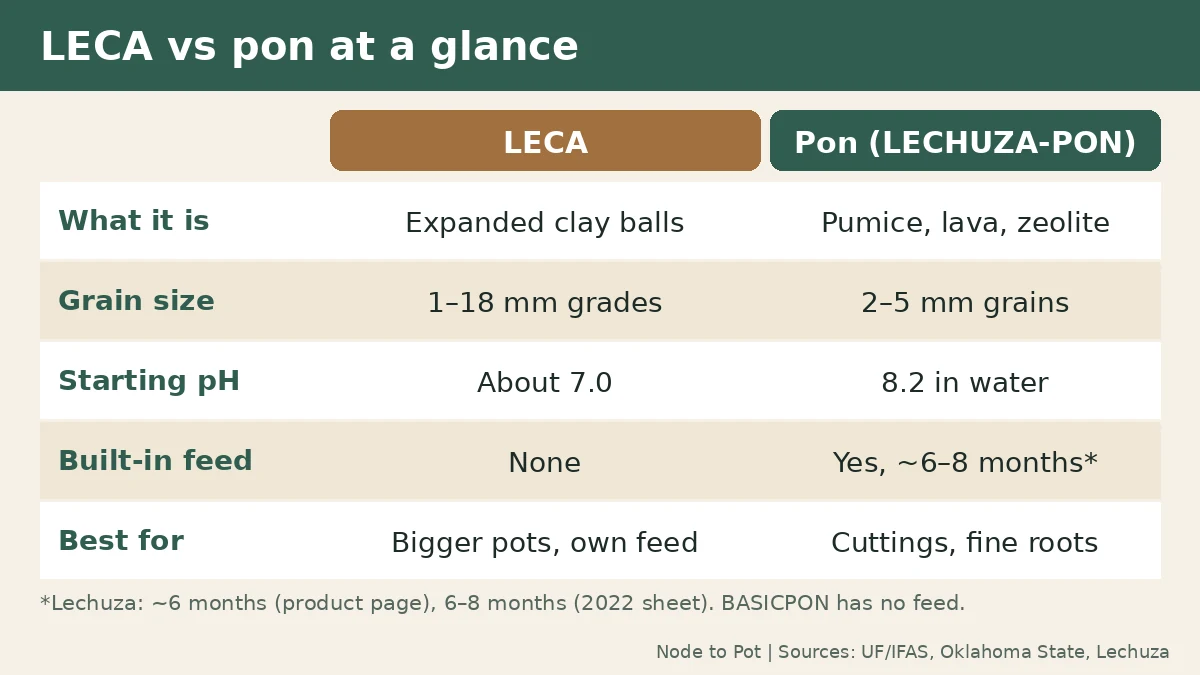
LECA vs pon at a glance
| LECA (expanded clay) | Pon (LECHUZA-PON) | |
|---|---|---|
| What it is | Clay heated until it puffs into round, porous balls | Pumice, lava rock and zeolite, plus a coated NPK 15-11-14 fertilizer (Lechuza declaration) |
| Grain size | Sold in sizes from 1 to 18 mm, per UF/IFAS Extension | Irregular grains of 2–5 mm, per Lechuza’s product page |
| Starting pH | About 7.0, per Oklahoma State Extension | 8.2 in water (7.1 in calcium chloride), per Lechuza’s declaration |
| Built-in fertilizer | None; Oklahoma State says expanded clay releases almost no nutrients | Yes: about 6 months (product page) or 6–8 months (2022 sheet). BASICPON has none. |
| Nutrient holding (CEC) | High, per UF/IFAS | Comes from the zeolite; UF/IFAS lists pumice as having no CEC |
| Reuse | Yes; clean and sanitize between plants | Yes; the built-in fertilizer is not renewed |
| Often chosen for | Larger reservoir pots, plants fed with a complete hydroponic nutrient | Cuttings (BASICPON), finer or young roots, self-watering planters |
Weight and price vary by brand, grade and retailer, so we have left them out rather than guess. Check the bag weight and price per liter where you buy.
Grain size and shape: why it matters
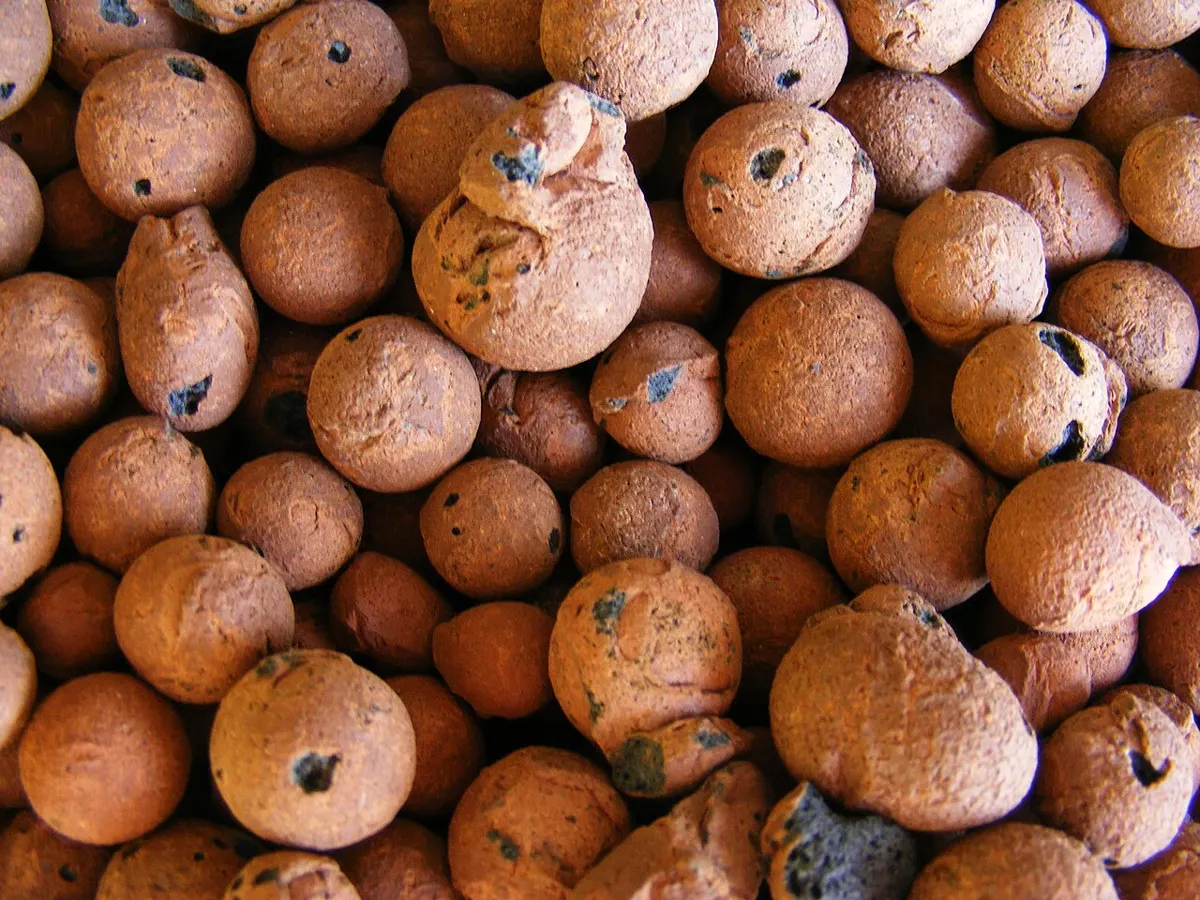
Grain size decides how much air sits around the roots and how much of each root touches a wet surface. LECA’s round balls leave large gaps. University of Minnesota Extension lists that as its main advantage: good airflow and easy root growth. The trade-off is limited water-holding capacity, which only becomes a problem if the water level is allowed to drop too far. LECA comes in several grades, so smaller balls suit smaller pots.
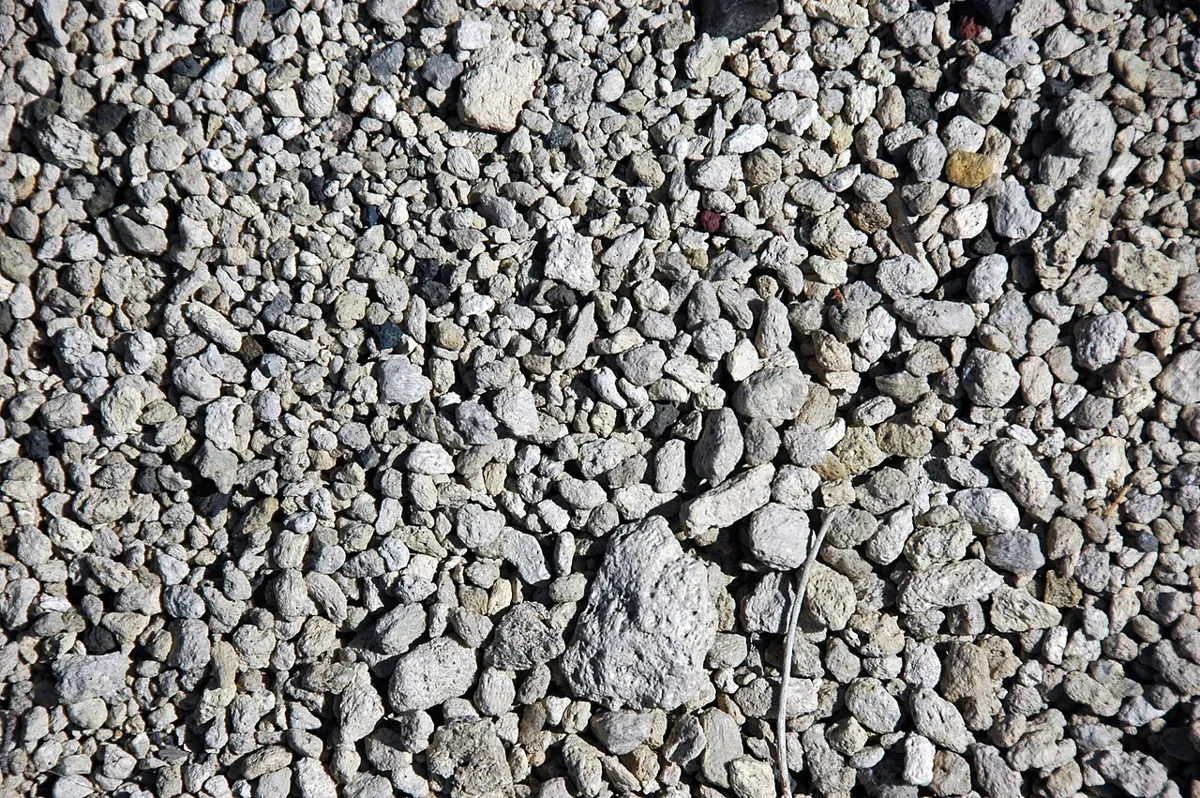
Pon’s 2–5 mm grains are smaller and jagged, so they pack more closely and give roots more contact points. It behaves more like a gritty mix than a pile of marbles when you pot into it.
pH: the difference most guides get wrong
LECA starts close to neutral. Oklahoma State gives expanded clay a pH of about 7.0, so it shifts the water very little.
Pon is often called “slightly acidic” in hobby guides. Lechuza’s own declaration says otherwise: 8.2 measured in water and 7.1 in calcium chloride. That is alkaline. Neither figure tells you exactly where your root zone will settle once tap water and fertilizer are involved. The RHS hydroponics guide gives pH 5.8–6.2 as the usual target for nutrient solutions, and UMN gives a wider 5.4–7, so whichever medium you use, test the solution and the runoff with a meter or strips rather than trusting the bag.
Fertilizer: built in or bring your own
This is the difference that changes your routine most. LECA contains no nutrients, so you feed from day one with a complete hydroponic fertilizer that includes calcium, magnesium and trace elements as well as nitrogen, phosphorus and potassium.
LECHUZA-PON arrives pre-fertilized, but Lechuza gives two figures for how long the feed lasts:
- The international product page says about 6 months.
- The 2022 substrate sheet says 6 to 8 months.
Temperature, light and how fast the plant grows all affect how quickly a coated fertilizer runs out, so treat the range as a guide. The cautious reading is to watch new growth from around month six and resume feeding when it pales or slows, rather than waiting for month eight.
If you already have a liquid nutrient you like, fertilized pon plus that nutrient means double feeding for the first months. Use LECA, or Lechuza’s unfertilized BASICPON. If you would rather blend your own unfertilized mix, see how to make pon.
Nutrient holding (CEC)
Cation exchange capacity (CEC) is a medium’s ability to hold positively charged nutrients such as potassium and ammonium and release them later. UF/IFAS Extension (EP623) lists expanded clay as having a high CEC and pumice as having none. Oklahoma State, meanwhile, says expanded clay releases almost no nutrients of its own. Those statements don’t really clash: holding nutrients you add is different from supplying them. In practice, don’t count on either medium to make up for missed feedings.
In pon, most of the nutrient-holding capacity comes from the zeolite. The RHS says zeolite is prized for its high CEC. Pumice and lava mainly provide structure and air space.
Which roots suit which medium?
Love That Leaf, a New Zealand plant-supply retailer, says in its pon growing guide that some growers find pon’s smaller grain more root-friendly for finer, young or damaged roots and for propagating. Its product page calls pon “more user friendly than Leca for growing and propagating”. That is a retailer’s view, not a controlled trial, but it fits the physical differences: small grains give delicate roots more surfaces to grip and hold moisture more evenly than big balls.
The flip side is root rot, the main risk with both. The RHS calls clay pebbles “tricky for beginners”, and the warning applies just as much to pon if old soil is left on the roots. Whichever you choose, rinse the roots clean before potting.
Setup and maintenance compared
Preparing it. UMN advises soaking hydroponic substrate in water for 24 hours and changing the water before planting, to remove dust and residues that can affect pH. That is standard practice for LECA, and a rinse does no harm with pon, which can also be dusty.
Watering. In a reservoir setup, UMN’s guidance is to keep roots about one-third to one-half submerged; they should not be fully immersed. With LECA, most growers keep the solution in roughly the bottom third of the pot. Pon wicks well, so the same low-reservoir approach works. If you grow in self-watering planters, follow the planter maker’s instructions for the first weeks.
Replacing the solution. The RHS recommends discarding hydroponic solution about every two weeks and making up fresh, because salts build up and the nutrient balance drifts. That applies to both media.
Reusing it. Both can be reused. Oklahoma State’s general guidance on reusing growing media is pasteurizing at 180°F for 30 minutes or using a 10% bleach soak for 20 minutes, followed by multiple rinses. With fertilized pon, remember that reused grains no longer carry their original feed, so you are effectively reusing unfertilized pon.
Which should you choose?
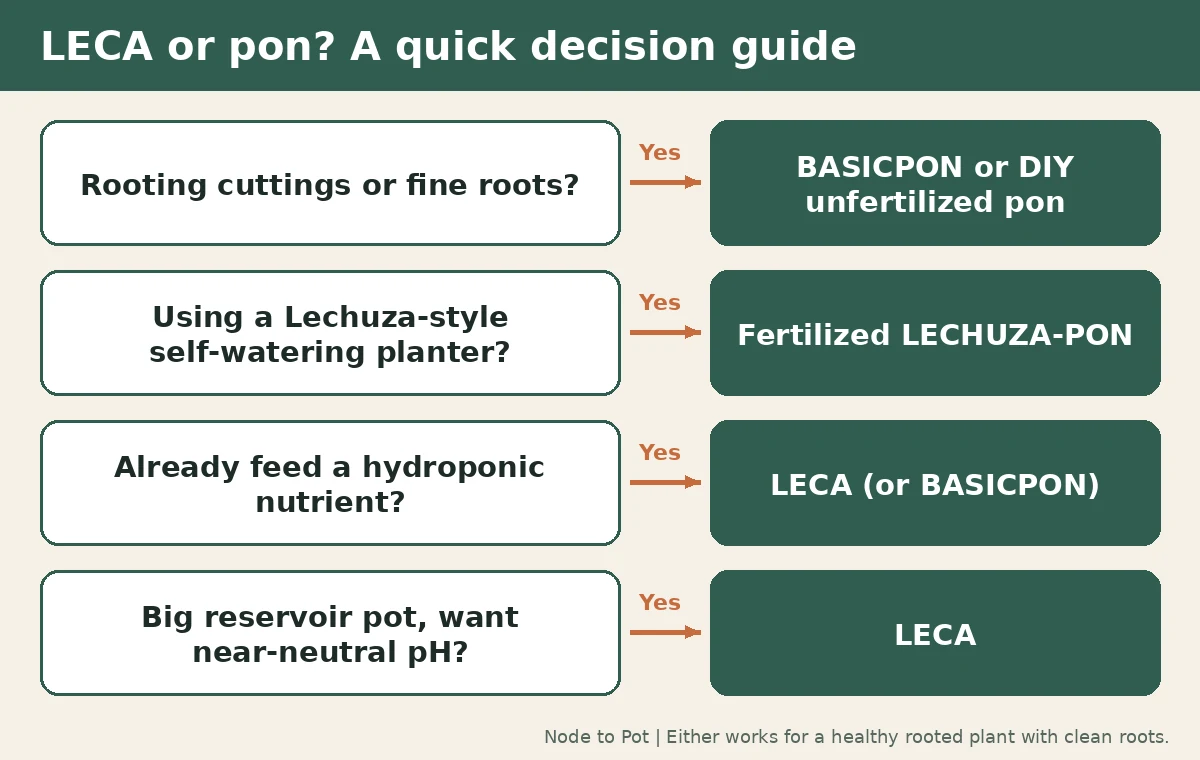
- Choose LECA if you already use a complete hydroponic fertilizer, want a near-neutral starting pH, or are filling large reservoir pots.
- Choose fertilized pon if you use Lechuza or similar self-watering planters and want the first months of feeding handled for you.
- Choose BASICPON or a DIY unfertilized mix for cuttings and finer roots, or when you want to control feeding from day one.
- Either works for a healthy, already-rooted plant if you clean the roots well and keep the water level right.
Moving a soil-grown plant? Read how to convert soil roots to water roots first. Our guides are built from extension and manufacturer sources; see how we research and write our guides.
FAQ
Can you mix LECA and pon in one pot?
You can, but we found no manufacturer or extension guidance on mixing them. The mix combines LECA’s large air gaps with pon’s built-in fertilizer and higher starting pH, so test the solution pH if you try it.
Is pon better than LECA for cuttings?
Love That Leaf says some growers find pon’s smaller grain more root-friendly for young roots and propagating, and calls it more user friendly than LECA for propagating. That is a retailer’s view, not a controlled trial.
Is pon acidic?
No. Lechuza’s declaration gives LECHUZA-PON a pH of 8.2 in water (7.1 in calcium chloride), which is alkaline. LECA is about 7.0.
How long does the fertilizer in LECHUZA-PON last?
Lechuza’s product page says about 6 months and its 2022 substrate sheet says 6 to 8 months. Plan to start feeding again from around month six if growth slows or pales.