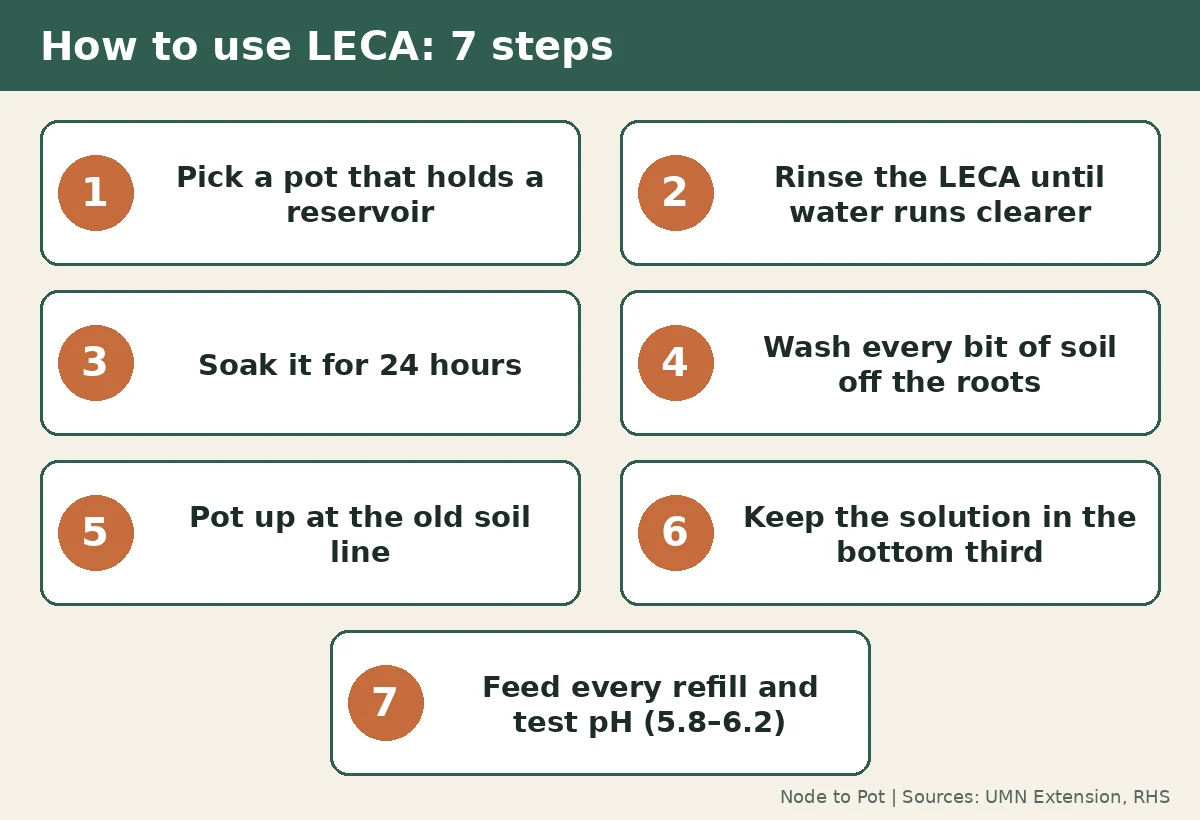
LECA (lightweight expanded clay aggregate) is the round, brown clay ball you see in semi-hydro setups. A plant sits in the balls, a pool of water and fertilizer sits at the bottom of the pot, and the roots take up what they need. Learning how to use LECA is simple once the pot is running, but most early failures come from setup: dirty clay, soil left on roots, or water sitting too high. Below is the beginner setup in seven steps, followed by how to keep it running.
Quick answer: Rinse the LECA, soak it for 24 hours, wash every bit of soil off the roots, pot the plant in a container that holds a reservoir, keep the solution low so most roots stay in air, feed with a complete hydroponic nutrient at about pH 5.8–6.2, and replace the solution regularly.
Before you start: what LECA is (and isn’t)
LECA is clay heated until it puffs up into porous balls. Oklahoma State Extension’s soilless growing media fact sheet says expanded clay releases almost no nutrients, is neutral with a pH of about 7.0, and floats until it is saturated. The University of Washington’s Miller Library notes that the gaps between balls give roots plenty of air, but the balls hold limited water. That only becomes a problem if the water level drops too far.
One point the sources frame differently: whether LECA holds nutrients. UF/IFAS Extension lists expanded clay as having a high cation exchange capacity (CEC), the ability to hold and release nutrient ions, and says it comes in sizes from 1 to 18 mm. Oklahoma State says it releases almost no nutrients of its own. Those two statements can both be true: holding nutrients you add is not the same as supplying them. The safe plan is to assume LECA gives the plant nothing and supply everything in the water.
LECA isn’t the only option. If you want a finer, mineral mix, see what pon substrate is or how to make DIY pon. For a side-by-side comparison, read LECA vs pon. The RHS calls clay pebbles “tricky for beginners”, so it pays to get the basics right from the start.
What you need
- LECA. Smaller balls suit smaller pots and finer roots.
- An inner pot with holes (a net pot or any plastic pot with slots) and a watertight outer pot or cachepot. Alternatively, use a single pot made for semi-hydro.
- A complete hydroponic fertilizer.
- A pH meter or test strips. An EC meter is useful but optional.
- A bucket, a colander and a bowl of lukewarm water for washing roots.
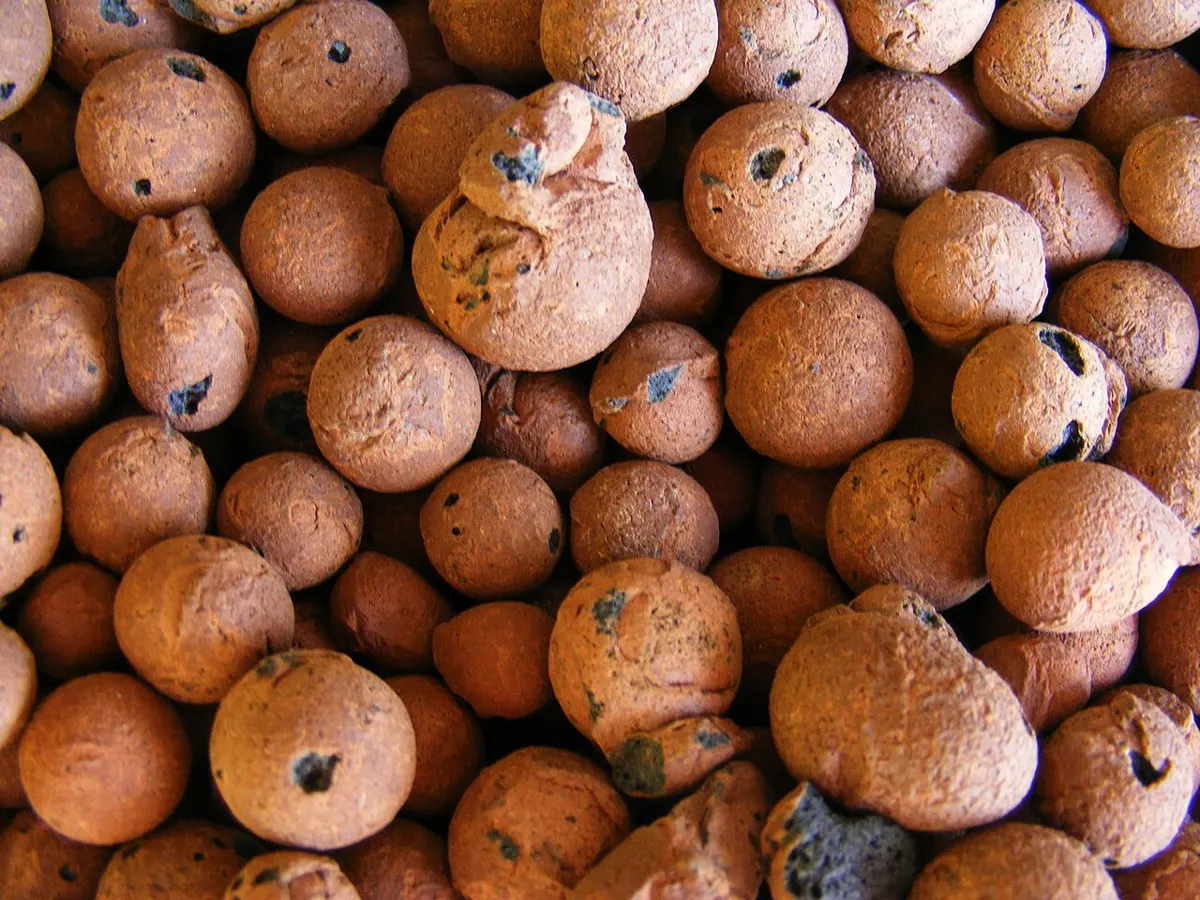
How to use LECA: 7 steps
1. Pick the container and plan the reservoir
Most beginners use two pots: an inner pot of LECA with holes in it, sitting in an outer pot that holds the solution. You can lift the inner pot out to check roots and tip out old solution, which makes flushing easy. University of Minnesota Extension’s small-scale hydroponics guide recommends opaque materials to cut light reaching the solution, which limits algae. A clear inner pot is fine if it sits inside an opaque outer one. Single pots with no drainage holes work differently and need more care, because there is no easy way to tip out old solution.
2. Rinse the LECA
New LECA carries clay dust and broken fragments. Put it in a colander or a bucket with drainage holes and rinse it under running water, stirring with your hand, until the water runs much clearer. Do this outdoors or over a bucket, not straight into a sink drain, so the clay doesn’t settle in the pipes.
3. Soak it for 24 hours
UMN Extension’s rule for hydroponic substrates is to soak them in water for 24 hours and change the water before planting. It says this removes dirt and debris and can remove residues that affect pH. For LECA, the soak also matters for a practical reason: Oklahoma State notes the balls float until they are saturated, and dry balls bob around and leave roots exposed.
4. Wash every bit of soil off the roots
Remove the plant from its pot and gently tease the old soil away. Then rinse the roots in a bowl of lukewarm water, changing the water until no soil comes off. UMN gives the same instruction for moving soil-started plants into hydroponics: rinse the roots to remove any remaining soil. Soil left on the roots stays wet in a semi-hydro pot and gives rot a foothold. Trim off any roots that are mushy or hollow. Soil roots often struggle at first after the move; our guide on converting soil roots to water roots covers that transition. Cuttings rooted in water usually make the switch more easily.
5. Pot up
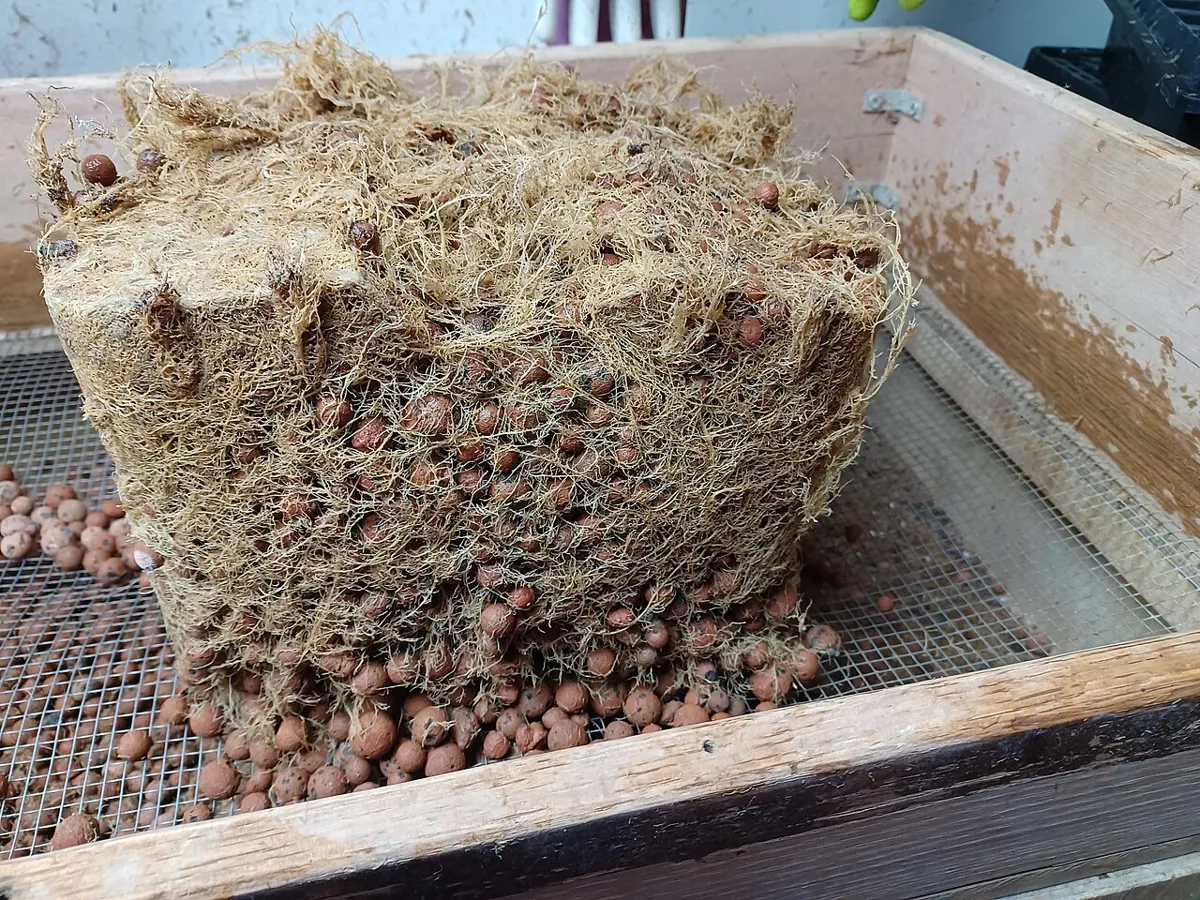
Add a layer of soaked LECA to the inner pot, hold the plant at its old soil-line height, and fill around the roots, tapping the pot so the balls settle. Don’t bury the stem deeper than it was. The roots should run down toward the bottom of the pot, where the water will be.
6. Set the water level
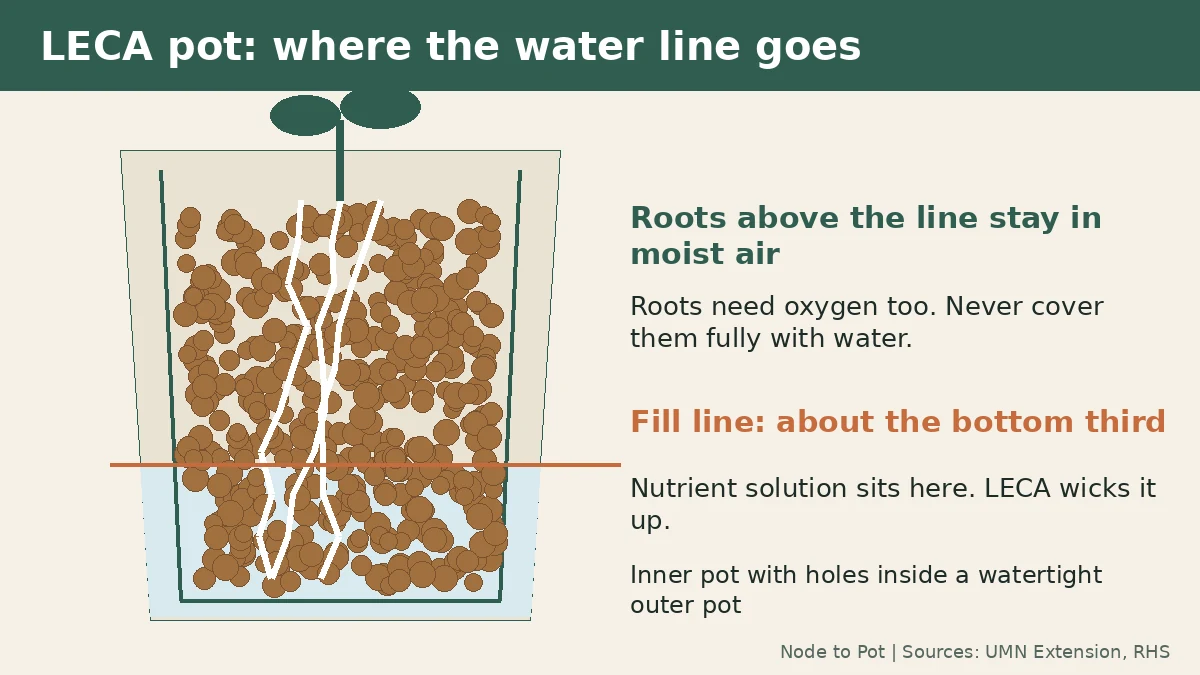
This is where most setups go wrong. Roots need oxygen as well as water. The RHS puts it bluntly: “roots of most plants will die in stagnant water.” UMN’s guidance, written for net pots over a reservoir, is to keep roots about one-third to one-half submerged; they “should not be fully immersed”. Roots fully covered by water can’t get enough oxygen and can develop root rot. In semi-hydro pots, the common hobby practice is to keep the solution in roughly the bottom third of the pot. The LECA wicks moisture upward, and the roots above the line stay in moist air.
A practical routine: fill to your line, let the level fall until the reservoir is nearly empty, then refill. A newly moved plant has few roots that can reach the water, so check it more often in the first weeks. How fast the level drops depends on the plant, the pot size, light and room temperature, so watch the line rather than following a fixed calendar.
7. Feed, and check the pH
LECA gives the plant nothing, so the water has to carry every nutrient. UMN points out that in soil-free growing you supply calcium, magnesium, sulfur and the trace elements as well as nitrogen, phosphorus and potassium. That’s why a complete hydroponic fertilizer is a better fit than a basic houseplant feed. Mix it at the label rate every time you refill, rather than alternating plain water with feed.
Then check the pH of the mixed solution. The RHS says a pH of 5.8–6.2 is usually the aim and suggests citric acid to lower pH and baking soda to raise it, or proprietary pH-up and pH-down products. UMN gives a wider workable range of 5.4–7 and says the solution is ideally kept above 65°F. Tap water is often above the target range, and the pH can change after you add fertilizer, so always test after mixing, not before.
Keeping it running: flushing and replacing the solution
As plants drink, the solution left behind gets stronger. The RHS warns it can become salty enough to damage roots and that the nutrient balance shifts over time. Its advice is to discard the solution about every two weeks and make up fresh. For a houseplant in LECA, that becomes a simple routine:
- Tip out the old solution rather than topping it up forever.
- Every so often, run plain water through the LECA from the top to rinse out built-up salts. This is a flush. Then refill with fresh solution.
- White crust on the top balls is mineral buildup, a sign the pot is due a flush.
- Don’t pour spent solution down the drain. UMN suggests using it on the garden or other plants instead.
Reusing LECA
LECA can be used again; it doesn’t break down like bark or peat. Clean it before you reuse it, because old roots and biofilm can carry disease to the next plant. Oklahoma State’s general guidance on reusing growing media is “pasteurizing at 180 F for 30 minutes or using a 10% bleach soak for 20 minutes followed by multiple rinses”. Applied to LECA, that means:
- Pick out old root pieces and wash the balls in soapy water, then rinse.
- Heat: pasteurize at 180°F (about 82°C) for 30 minutes, or
- Bleach: soak in a 10% bleach solution for 20 minutes, then rinse several times and soak again in clean water before planting.
What about hydrogen peroxide?
Many hobby guides suggest adding hydrogen peroxide to the reservoir or dipping roots in it to prevent rot. We found no extension service or RHS guidance that supports doing this to houseplant roots or their water, so we don’t recommend it. The only peroxide mention in the sources we used is UMN listing labeled hydrogen-peroxide-based sanitizers for cleaning empty hydroponic equipment between crops. That is equipment cleaning, not plant care. Rot prevention starts with soil-free roots, a low water line and fresh solution.
The mistake to avoid: LECA at the bottom of a soil pot
LECA is often sold as a “drainage layer” for ordinary potted plants. The UW Miller Library advises against it. It says not to mix clay balls into potting soil or put them in the bottom of a container, because a layer of different material creates a perched water table: water stops at the boundary and saturates the soil above it. The same page is skeptical of growing houseplants in LECA with no drainage holes and says plants are still best kept in suitable potting soil in pots that drain.
The research isn’t completely one-sided. A 2025 study in PLOS ONE found that drainage layers “almost never increased” water retention in loamless media and usually reduced it. That study looked at coir, bark and loam-based mixes, not houseplants in LECA, but it points the same way: a drainage layer is no substitute for a drainage hole. Use LECA as the whole medium, or don’t use it in that pot at all.
Everything above is drawn from extension and RHS publications; you can read how we research and write our guides. More semi-hydro guides are on the semi-hydro hub, and if you’d rather skip substrate entirely, see growing plants in water.
FAQ
Do you have to soak LECA before using it?
Yes. UMN Extension recommends soaking hydroponic substrate for 24 hours and changing the water before planting. It also helps LECA stop floating.
How high should the water be in a LECA pot?
Low. Hobby growers usually keep the solution in the bottom third of the pot. UMN keeps hydroponic roots only about one-third to one-half submerged, never fully covered.
What pH should LECA water be?
The RHS gives 5.8–6.2 as the usual target for hydroponics. UMN gives a wider 5.4–7. Test the solution after adding fertilizer.
Can I reuse LECA?
Yes. Clean it, then follow Oklahoma State’s general guidance for reusing media: pasteurize at 180°F for 30 minutes or soak in 10% bleach for 20 minutes, followed by multiple rinses.
Does LECA have nutrients?
Plan as if it has none. Oklahoma State says expanded clay releases almost no nutrients. UF/IFAS lists it as high in CEC, meaning it can hold some of the nutrients you add.